
Discover

History & Heritage

In 1888, a visionary idea to provide a beautiful place to live for working class people became a reality

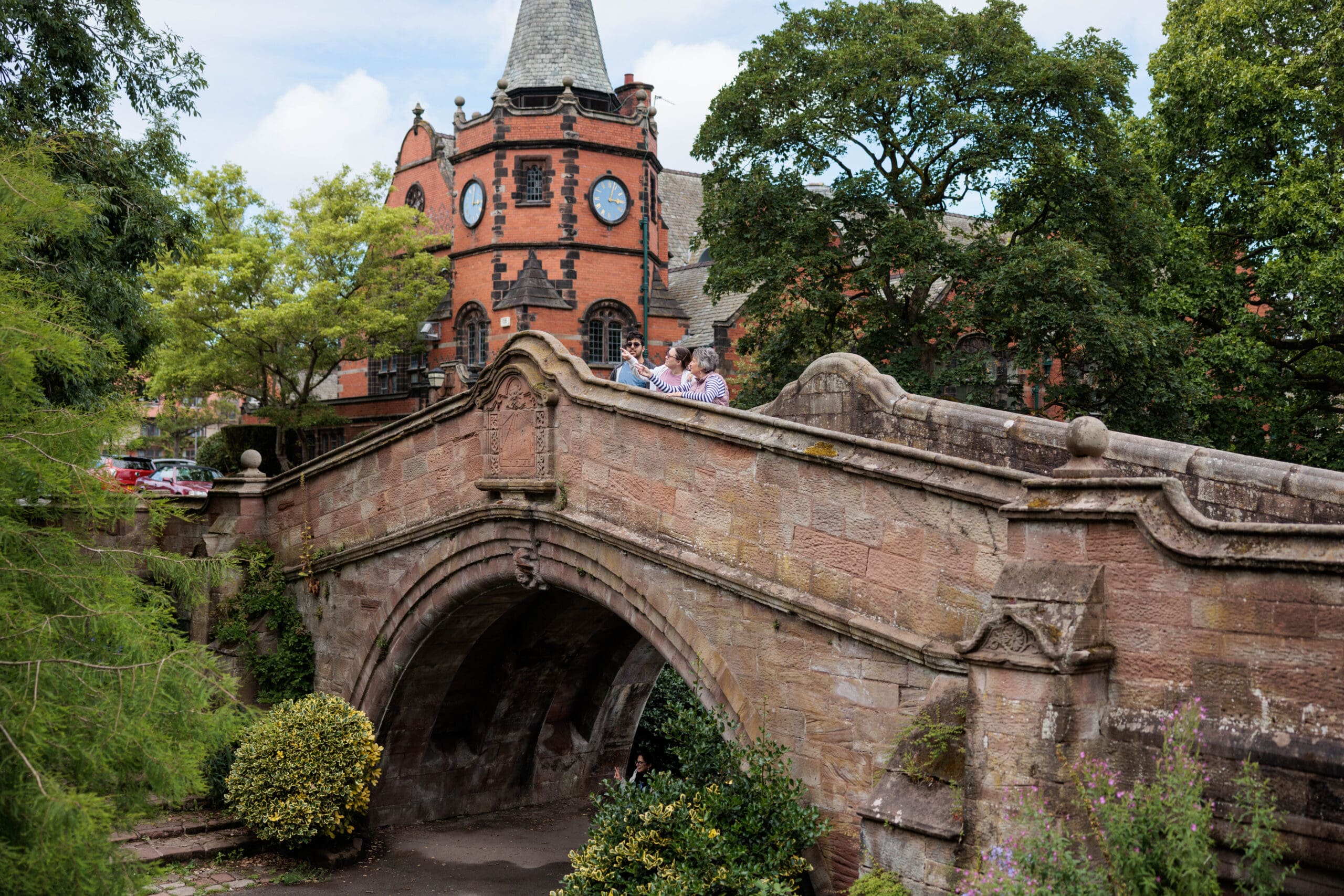
Port Sunlight is arguably the finest surviving example of early urban planning in the UK, and has remained largely intact since its foundation by William Hesketh Lever in 1888.

The village is home to more than 900 Grade II listed buildings set in 130 acres of parkland and gardens. More than 30 different architects created the buildings, monuments and memorials we still see today, and nearly every period of British architecture is represented through revival design. The village is a good example of the aesthetic movement, which emphasised visual and sensual qualities of art and design, and the Arts and Crafts Movement, with its emphasis on traditional craftsmanship.

Explore our timeline of Port Sunlight’s history here.
Why was Port Sunlight built?

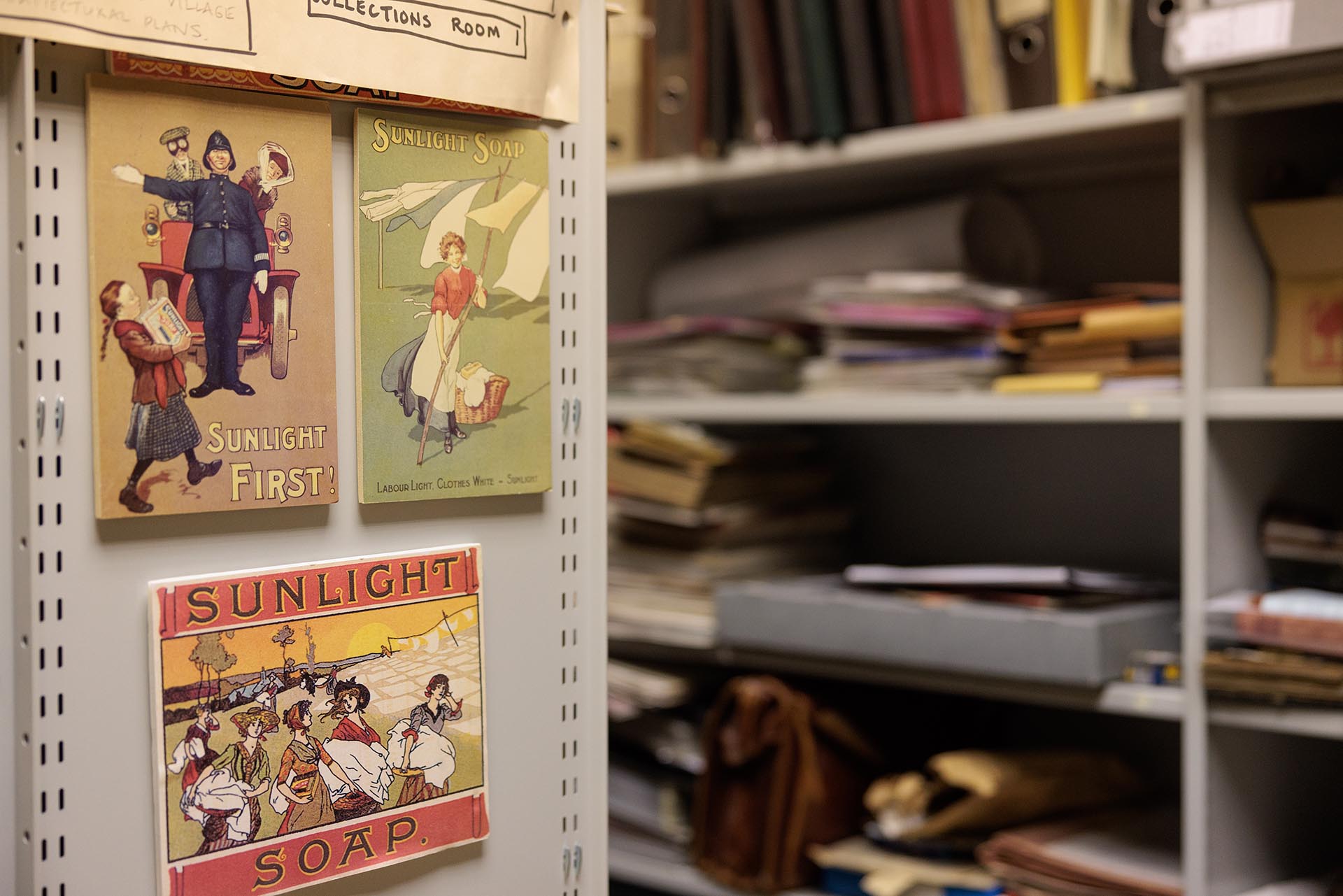
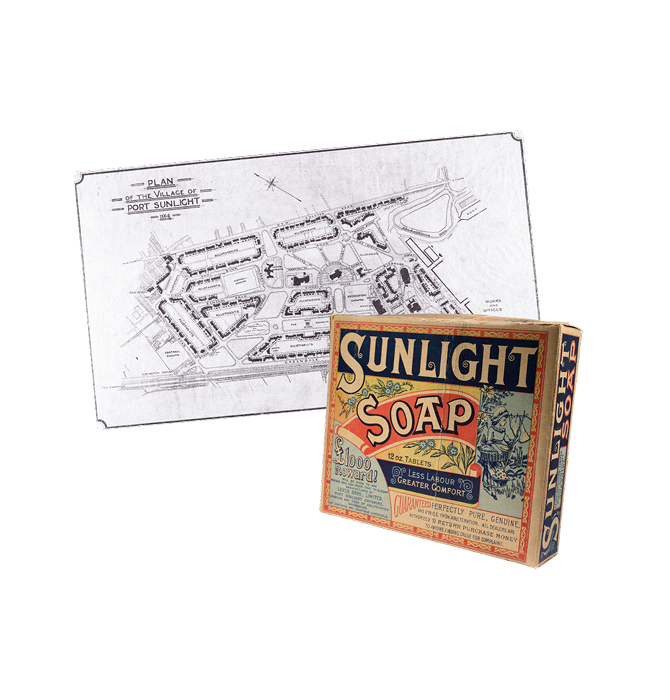
Lever built Port Sunlight to house the workers at his soap factory, Lever Brothers, which eventually became the global giant, Unilever. The village represents one man’s vision to provide industrial workers with decent, sanitary housing in a considered architectural and picturesque form.

However, rather than a philanthropic venture, Lever claimed it was all part of a business model he termed ‘prosperity-sharing’. Rather than sharing the profits of the company directly with his employees, Lever provided them with decent and affordable houses, amenities and welfare provisions that made their lives secure and comfortable and enabled them to flourish as people. It was also intended to inspire loyalty and commitment.


An influential village

Port Sunlight was by no means the first model industrial village, Robert Owen’s New Lanark on the River Clyde in Scotland was developed from 1800, and Sir Titus Salt’s village of Saltaire from 1851. But at Port Sunlight, these ideas were combined with provision of green spaces, parkland, and public buildings, which became the key influence on the Garden City Movement.

Explore the global story and impact of Port Sunlight here.


Port Sunlight today

Today, the name Port Sunlight is synonymous with leafy, well-planned housing developments and communities, with many imitators looking to create the ‘next Port Sunlight’. It is one of the best surviving examples of an industrial worker settlement in the UK and arguably the world, and home to around 2,000 residents who live in its beautiful cottages.

Port Sunlight Village Trust, an independent charity, acts as custodian and works to preserve and promote the village alongside residents and strategic partners including Wirral Council and Unilever, who still have an important research and development site where the original factory stood.


Telling the fuller story

Although workers in Port Sunlight benefited from improved living conditions, we know that others elsewhere in the world didn’t. From the turn of the twentieth century, in a bid to source ingredients for his soapmaking operations cheaply, William Lever began setting up plantations in places that included the Solomon Islands and the former Belgian Congo. For more information about Lever’s colonial dealings in Central Africa, read our research booklet Racism, the Belgian Congo, and William Lever.

Now, thanks to the impact of international anti-racist movements confronting colonial legacies, evidence of enforced labour and racial violence at plantations like these is increasingly being brought to light. PSVT has been undertaking a programme of research to openly explore the village’s own colonial links and help shape a truly inclusive local culture, as part of our anti-racist commitments to Equity, Diversity & Inclusion.


Experience Port Sunlight’s history for yourself

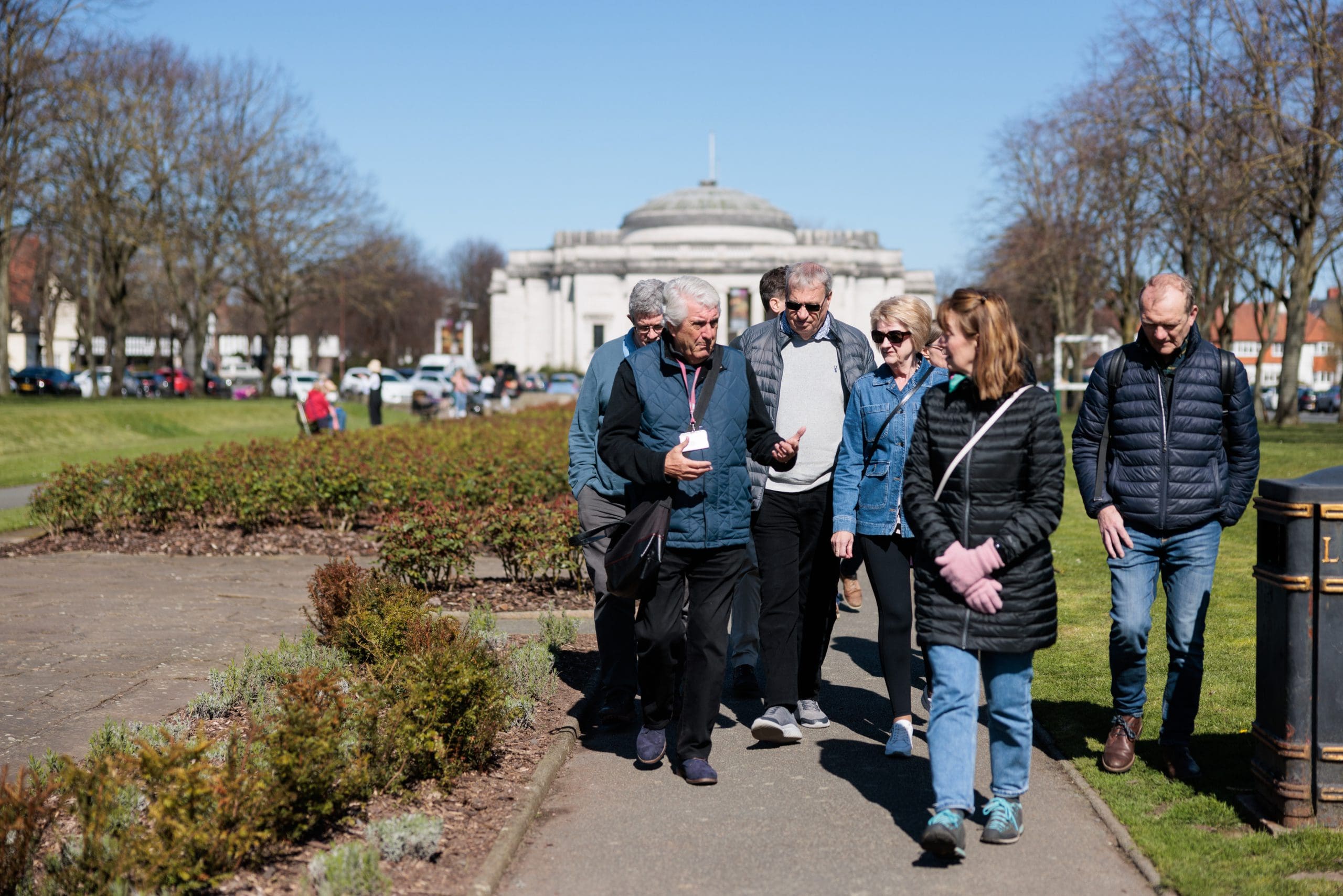
We don’t want you to miss a thing on your trip to Port Sunlight. No visit is complete without exploring the history of this special village at Port Sunlight Museum, getting a feel for life in the village a century ago in the Worker’s Cottage, and joining a fascinating guided walking tour.


Drawn Together

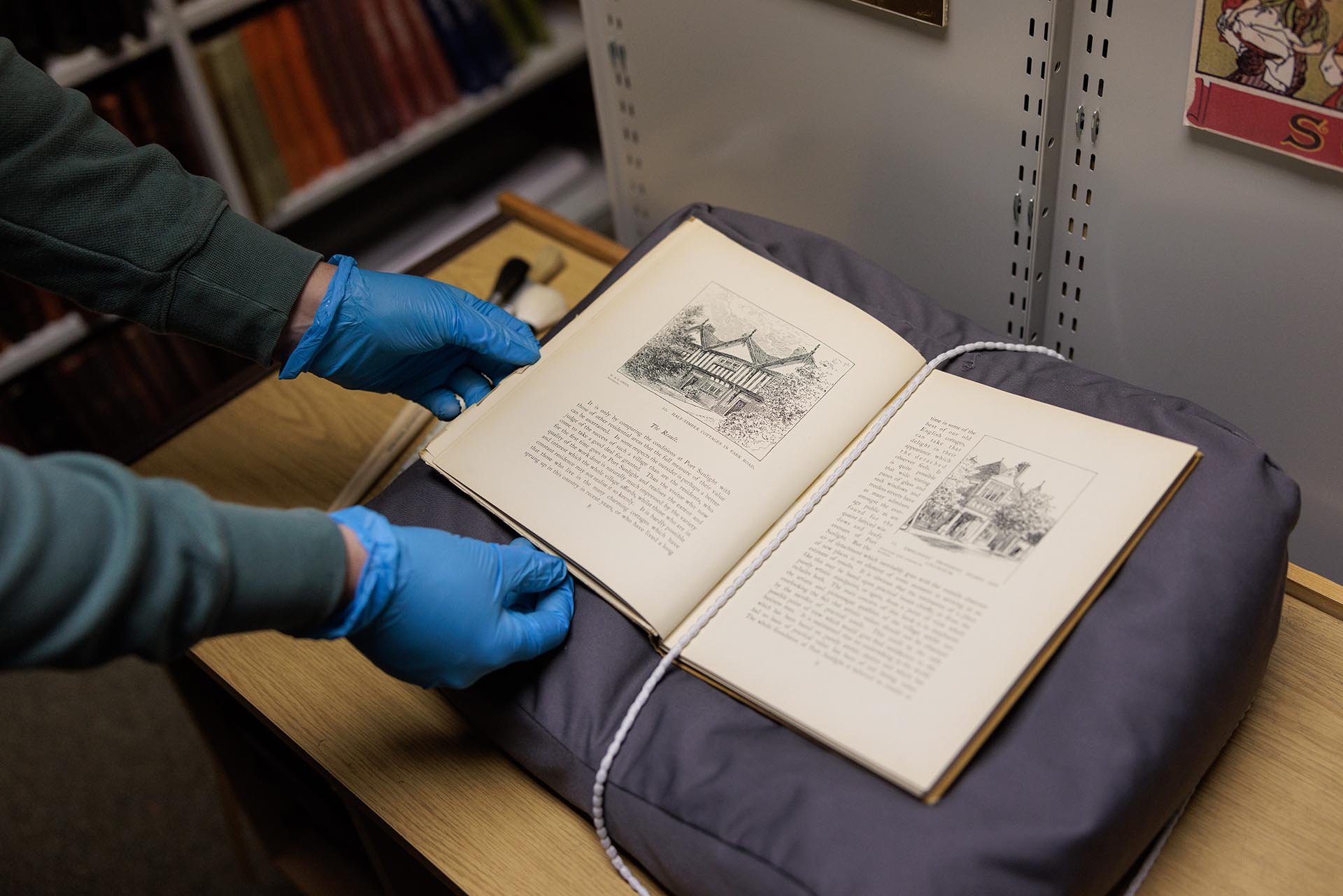
If you’re interested in looking at some of the original architectural drawings of the village, a recent project made possible by the Heritage Lottery Fund (HLF) called Drawn Together, allows you to look at thousands of original plans and detail drawings in a digital archive. Start exploring here: drawntogether.portsunlightvillage.com.

Timeline

Explore some of the most significant moments in Port Sunlight’s history.
1850–1899

1851, 19th September The founder of Port Sunlight, William Lever, is born in Bolton, Lancashire.

1872 William Lever is taken into partnership in his father’s wholesale grocery business, Lever & Co.

1884 Registration of the trademark ‘Sunlight’ by Lever & Co. In the same year, production of Sunlight Soap begins in Warrington.

1888, 3rd March First sod is cut at the Port Sunlight works by Lever’s wife, Elizabeth.

1889, June First boil of soap at the Port Sunlight works.

1889, September The first tenants, Mr & Mrs Sam Spencer, move into 6 Bolton Road, Port Sunlight.

1891 Gladstone Hall is opened by the Rt. Hon. William Gladstone MP.

1900–1924

1900 More than 400 houses exist in Port Sunlight, with the village perimeter almost entirely built upon. Building works start on the central properties.

1903 Church Drive schools, the Technical Institute and the Lever Library are opened in this year.

1904 Opening of Christ Church.

1911 William Lever is created a baronet.

1913 Death of Lady Lever.

1914, 25th March King George V and Queen Mary visit Port Sunlight.

1914-18 The Great War. More than 700 men from the works and village volunteer for active service.

1917 Sir William Lever is created a baron. He fuses his late wife’s maiden name with his own surname to create the name ‘Leverhulme’.

1921, 21st December Unveiling of the Port Sunlight War Memorial.

1922 Lady Lever Art Gallery is opened by Princess Beatrice. Also, Lord Leverhulme is raised to the rank of viscount.

1925-1949

1925 Death of Lord Leverhulme, founder of Port Sunlight.

1930 Lever Brothers merges with the Dutch Margarine Union to form Unilever.

1938 Golden Jubilee of Port Sunlight. Port Sunlight is considered complete in accordance with William Lever’s original vision.

1939-45 The Second World War. Air raids cause severe damage to the village.

1947 Work begins in the village to rebuild or repair properties that were heavily damaged during the Second World War. Works continue into the 1950s.

1950–1974

1950 Viscount Montgomery of Alamein visits Port Sunlight.

1954-59 Plans are filed with Cheshire County Council to improve the houses, including indoor toilets, upstairs bathrooms and modern kitchens.

1960 Port Sunlight is placed under the management of Unilever Merseyside Ltd (UML)

1962 The Beatles play Hulme Hall four times, including Ringo Starr’s first performance with the group on 18th August.

1963-1980 UML’s estates department undertakes a modernisation programme, and cottages are comprehensively renovated.

1965 Most of the houses and public and commercial buildings in Port Sunlight are listed at Grade II.

1975-1999

1978 Port Sunlight is declared a Conservation Area.

1980 The first houses are sold in the village.

1988 Centenary of Port Sunlight village.

1999 Formation of Port Sunlight Village Trust (PSVT). In this same year, PSVT takes over from UML the management of communal buildings and the landscape, as well as the remaining houses not yet in private ownership.

2000–Present

2002 The Dell and The Diamond and The Causeway are registered at Grade II in the Register of Parks and Gardens in England.

2006 Opening of Port Sunlight Museum.

2006 PSVT launches its first Conservation Management Plan.

2010 Restoration of the War Memorial.

2013 The village and Unilever celebrate the 125th anniversary of the founding of Port Sunlight.

2014 To commemorate the 100th anniversary, PSVT recreates the day when 700 Lever Brothers’ employees travelled to Chester to enlist in the 13th Battalion of the Cheshire Regiment.

2014 ‘The Defence of the Home’ War Memorial is upgraded from Grade II* to Grade I.

2017, 25th March Gas explosion causes significant damage to properties in New Ferry and Port Sunlight.

2018 PSVT launches its first five-year Strategic Plan and revised ten-year Conservation Management Plan.